
Within the sophisticated architecture of a precision injection mold, strategic design choices can dramatically impact its functionality, cost, and lifespan. One of the most impactful design strategies is the use of mold inserts. At SANDO, we engineer and manufacture molds where the judicious application of inserts is a cornerstone of intelligent design. This article explores the compelling reasons to incorporate mold inserts and how they contribute to superior mold performance.
What Are Mold Inserts?
Mold inserts are modular, replaceable components that are fitted into a master mold base or holder block. They form specific, critical sections of the mold cavity or core. Unlike a monolithic mold block, which is machined from a single piece of mold steel, an insert-based design creates a segmented, serviceable system.
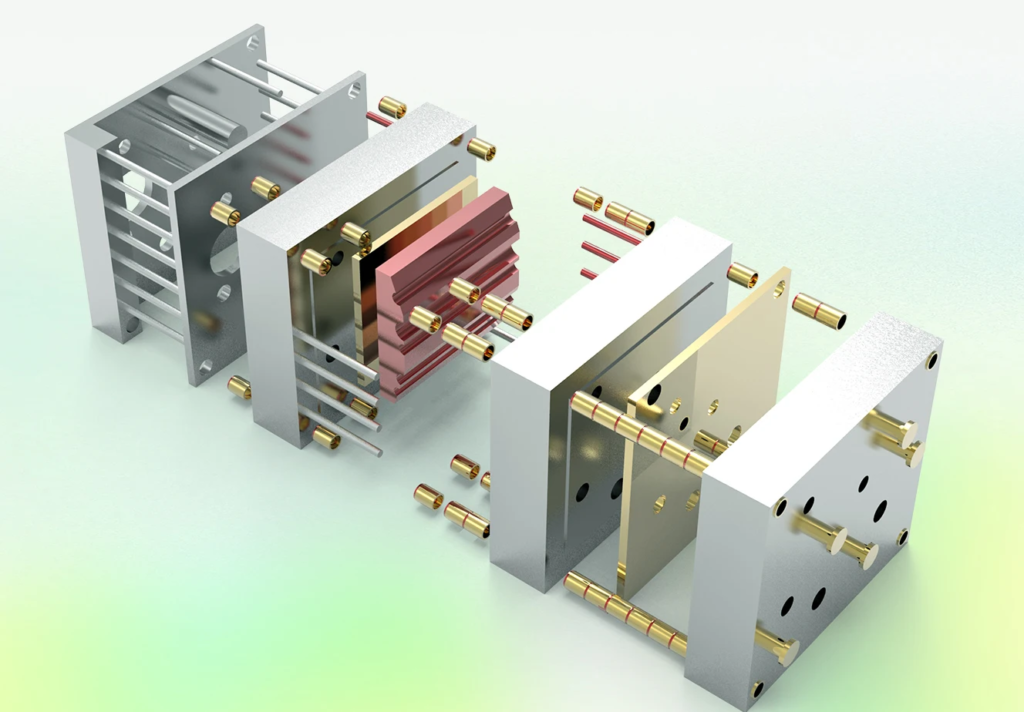
The Strategic Advantages of Using Mold Inserts
1. Enabling Superior Material Performance and Durability
Different areas of a mold face vastly different challenges. Inserts allow for targeted material selection to meet each challenge optimally.
- Localized High-Performance Steels: Critical, high-wear areas like gates, thin ribs, or sections in contact with abrasive materials (e.g., glass-filled resins) can be made from premium, hardened mold steel (e.g., high-hardness tool steels). The surrounding mold base can be made from a tougher, more economical grade.
- Enhanced Corrosion Resistance: For molding PVC or other corrosive materials, inserts made from corrosion-resistant steels (e.g., 420 Stainless Steel) or with specialized surface treatments can be used in the flow path, protecting the main mold body.
- Optimized Thermal Conductivity: Inserts made from high-thermal-conductivity materials (like copper alloys) can be strategically placed in “hot spots” to improve local cooling efficiency and reduce cycle time.
2. Dramatically Simplifying Mold Manufacturing and Repair
Inserts transform complex machining into manageable tasks and make repairs feasible.
- Machining Simplification: Complex cavity or core geometries can be machined on a smaller, more accessible insert block rather than deep inside a large mold base. This improves machining accuracy, simplifies EDM electrode fabrication, and facilitates better mold polishing.
- Cost-Effective Repair and Modification: If a specific area is damaged (e.g., a cracked core pin, a worn gate area, or a damaged texture), only the affected insert needs to be replaced or re-machined. This is far faster and less expensive than repairing a monolithic mold block, minimizing production downtime during mold maintenance.
3. Unlocking Design Flexibility and Future-Proofing
Inserts provide a level of adaptability that monolithic molds cannot match.
- Design Iterations and Prototyping: For product development, critical sections can be swapped quickly between iterations without rebuilding the entire mold base. Different gate designs or part features can be tested efficiently.
- Family Mold and Product Variants: In a multi-cavity mold for different product variants, interchangeable inserts allow one master mold frame to produce multiple parts. This is highly efficient for low-volume production of similar items.
- Texturing and Finishing Flexibility: Different surface finishes (polish, texture) can be applied to insert sets, allowing a single mold to produce parts with varying aesthetic requirements by simply changing the inserts.